

Operatic Animals
Part 1: The Thieving Magpie

Welcome to the first proper installment of the operatic animals series! The first opera we will be looking at is La Gazza Ladra, or The Thieving Magpie, by Gioachino Rossini.
So, I said I would start these pieces with a synopsis of the opera in question, and I will. However, while doing research I remembered a small inconvenience of operatic synopses: they’re very detailed and somewhat hard to follow. So instead I will give you the short version that you’ll hopefully still enjoy.
We start the opera with a conversation between a tenant farmer, Fabrizio Vingradito, and his wife Lucia. Fabrizio says how nice it would be if their son Giannetto were to marry Ninetta, one of their servants. Lucia is not convinced. Aside from everything else, she claims Ninetta has lost a silver spoon to which she was particularly attached. Not a good quality in a future daughter-in-law.
A lot of things happen next, including a visit from Ninetta’s outlaw father, but I couldn’t figure out what was going on exactly so we’re going to fast-forward to the next exciting part, which is that Giannetto comes home, only for Ninetta to be carried off to prison after Lucia accuses her of having stolen the silver spoon in question, as well as several other important bits of cutlery! Apparently this is a crime punishable by death, because Ninetta gets sentenced to death.
SPOILER ALERT!
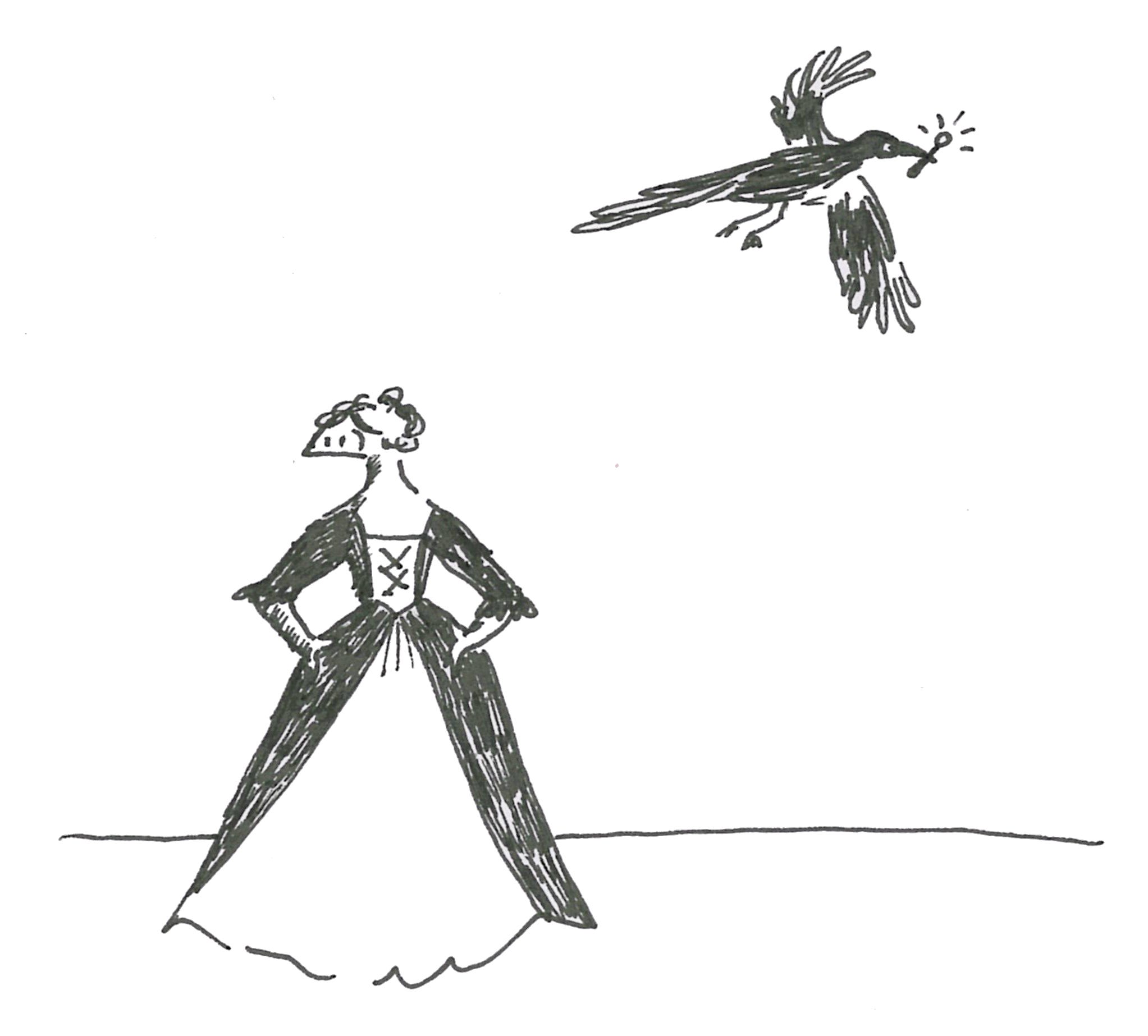
Just before Ninetta is about to be killed, a bunch of the other characters I haven’t had time to introduce figure out that actually it’s been a magpie who stole all the silverware, thus proving Ninetta’s innocence.
But alas! A series of gunshots is heard at the time established for Ninetta’s execution. Tears flow.
But hooray! The gunshots were actually blanks shot at the sky in celebration, for the proof of her innocence arrived just in time to save her! Everyone agrees that shooting guns in celebration of not being killed by gunfire is a completely normal and appropriate use of firearms. Also agreed on is the fact of carrying Ninetta home on a flowered wagon, because the poor girl deserves something nice at this point. Ninetta and Giannetto, ignoring the probably useful option of taking a few days to recover from all this commotion, get married then and there, with Ninetta’s no-longer-outlaw father as witness.
The End.
And now, let’s talk about the cause of some of these problems (because a lot of them were a result of human stupidity as well): the magpie.
Magpies are very cute birds that live in my city and that I love to see because they don’t live in NYC, where I’m from. They are a part of the corvid family which also includes crows and jays. It should come as no surprise, then, that they’re considered very intelligent birds (although our idea of what makes other animals intelligent is deeply flawed and I will dedicate a post to this at some point, if I haven’t already).
Obviously there are a bunch of different kinds of magpie, but I will be focusing on the Eurasian magpie, in part because that’s probably the one Rossini had in mind, and in part because its Latin name is Pica pica and this makes me happy.
Also, there is some debate about how many species of magpie exist. Some argue that there are five different species, as well as a number of subspecies. Others say nope, they’re all one species with a lot more subspecies. As I’ve mentioned before, species classification is useful only up to a point, so I’m going to ignore these arguments.
The other thing you may think you know about magpies is that they like shiny things.
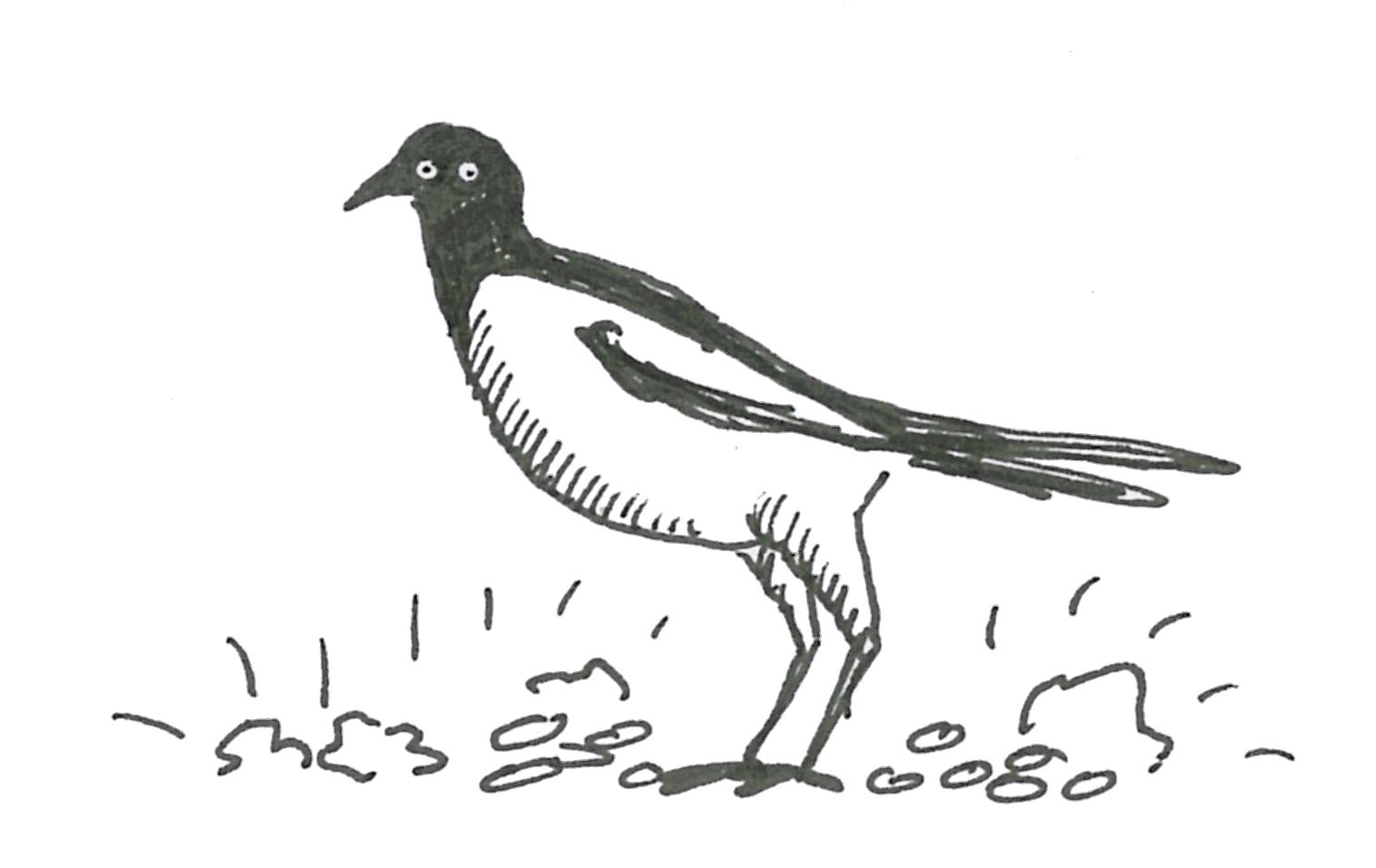
But a 2015 paper from the University of Exeter seems to disprove this perception. After testing a number of magpies by placing shiny and non-shiny items near their food source, they observed that the magpies were largely indifferent to any of the objects, and if anything had a slight aversion to the shiny ones. They also stated that despite searching several magpie nests, they found no shiny objects in any of them, as you would expect if they carried off as many shiny things as we think they do. This doesn’t mean that no magpie was ever interested in something shiny, but it does seem to show that they’re not as obsessed with them as we all think.
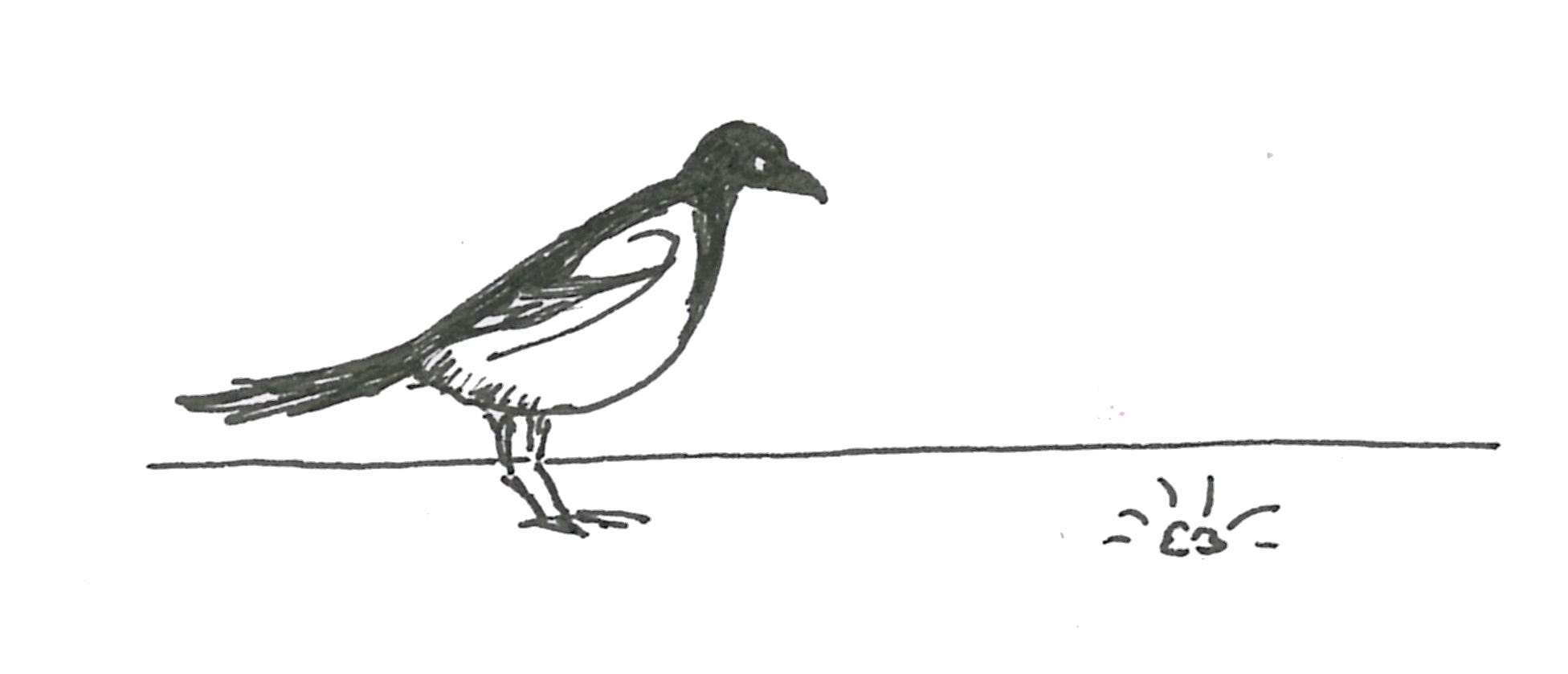
This does make the above opera less likely (because opera plots are famously realistic and probable). It also throws a wrench in the plot of Detectorists, my favorite TV show that you should watch if you haven’t already.
But that’s okay, because art doesn’t have to be 100% accurate all the time. So, if Rossini wanted to make poor Ninetta risk death because a magpie stole a spoon, we’ll let it slide.
For those who are interested, here is a link to the opera’s overture and here is a stop-motion animation inspired by the opera.